


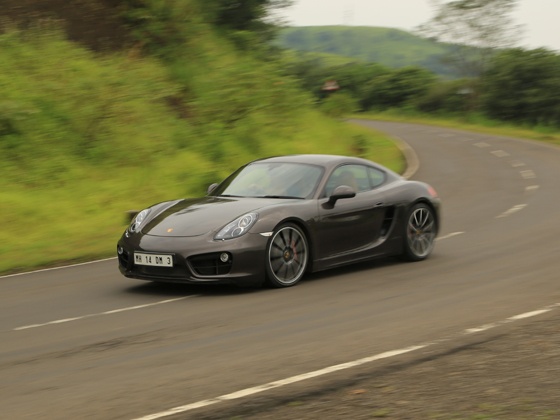
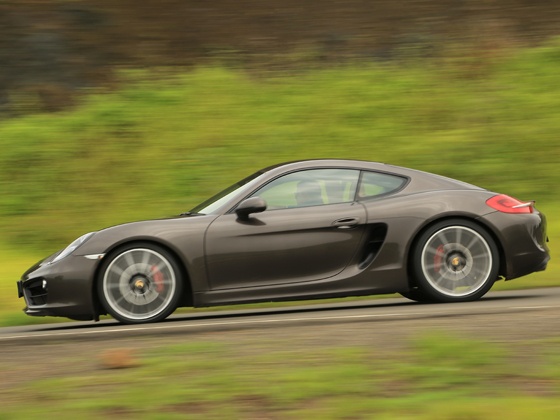
As the world moves on to fuzzy logic and intuitive feel being worked into things mechanical with electronic control, what hope therefore does the diehard enthusiast have when it comes to the breed we know as the sports car? Adil Jal Darukhanawala found the answer to that in the latest generation Porsche Cayman, a car which is so overwhelmingly brilliant in all what it sets out to do that it could just be the worlds' best in its category!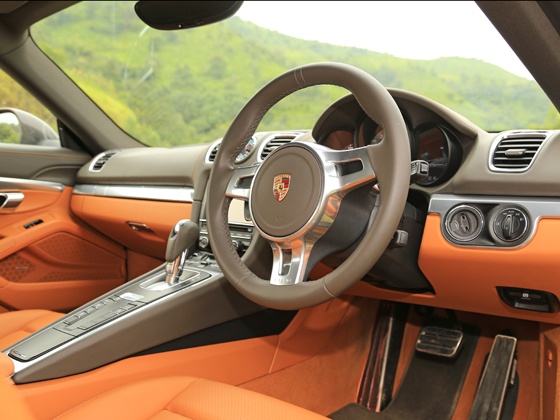
Doing an encore with an all-new evolution of the original is a hard nut to crack. Many have tried in sincerity and haven’t attained that definitive step up the ladder. Whether that thought was paramount in the minds of the Porsche engineers at Weissach or not as they worked on the next generation Cayman but they just had to go after it, didn’t they? However, what was already manifest in the minds of the Cayman project team was not just to get the second generation Cayman various notches above the car to be replaced but in doing so they didn’t have to eclipse the iconic mother lode with which Porsche continues to be revered on an on-going basis – the classic 911 in all its iterations! 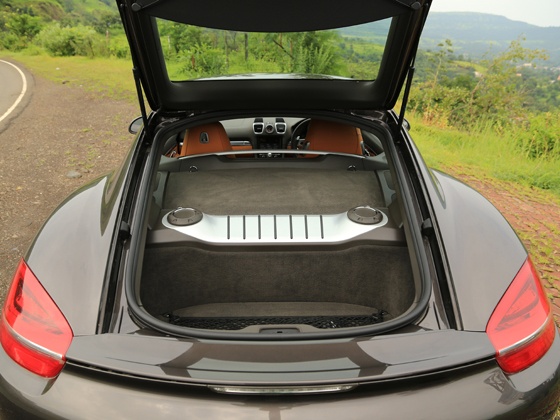
The Cayman was born out of the iconic Boxster but it is not just about a Boxster given a roof. The very essence of Porsche having learnt from the 911 and made a few critical changes to Dr Ferdinand Porsche’s original design has made the Cayman achieve a balance of poise and grip which were always against the 911 trying to alter the laws of physics with its rear engine layout. And let me qualify this at the very outset because the Cayman, unlike the 911, has its engine and tranny package located between the rear wheels rather than behind the rear axle line and this makes all the difference in the dynamic ability, control, poise, stability, turn-ion and what have you. Of course it is control that is so very much needed when you have a car that makes in excess of 300 horsepower (321 to be precise in the case of the Cayman S which we had with us for a magical mountain blast) and in every sense of the term the new Cayman S is perfection personified.
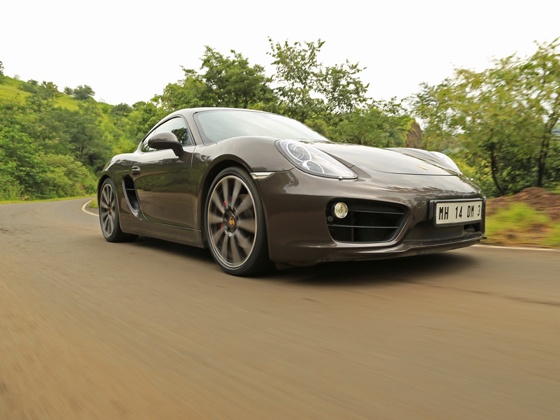
The raw details first before we get to put pedal to the floor and the new second gen Cayman has shed some bulk – 30 kilos but that’s been bettered by an increase of 5 additional horses in the case of the 3436cc flat-six that powers the Cayman S. If that’s not all, the boxer motor gets direct fuel injection, stop-start, intelligent charging of the battery under braking as well as on the over-run (just like in my BMW) and low resistance tyres. In fact, I was astonished to find that for India as well the new Cayman S comes with 40-profile rubber with 19-inch wheels no less but our test car came with 35-profile Pirellis wrapped around 20-inch alloys and even then I couldn’t keep marvelling on the quality of the ride they deliver, clearly highlighting the new chassis-suspension combo has improved the car from good to great by leaps and bounds. Key to this is a 60mm increase in the wheelbase which with the stiffer chassis makes the car even more nimble and can be chucked about with some verve. The enhanced wheelbase is further beefed up by an increase in the track widths; up front the track is now widened by 40mm to measure 1526mm while at the rear the increase is 12mm to clock in at 1621mm. This is also one of the key aspects to the strong stability of the new car which impresses with its superbly planted feel but without sacrificing agility in the least.
However, the big news with the second gen Cayman is the adoption of electronically assisted rack-and-pinion steering gear which with its ability to butt in sometimes to help correct driver input (Porsche terms this annoyingly nanny interference as “filtering action”) we found infuriating because when pushing hard I would love to be in control rather than a computer system fighting against me! Porsche has junked the hydraulically-actuated steering system for the electromechanical unit because it helps saves weight and also improves the weight distribution unlike what many opined was also a fuel and power saving measure. Porsche also offers another “Plus” option of the steering system whereby there is more assist on tap up to 50km/h – good for parking and while crawling through traffic. However, the velvety feel which was the order of the day with the previous generation Cayman’s hydraulic steering gear has been lost and even though the stiffer chassis helps to cover up for this with better body control and poise, the feel from the steering made us long for the original tactility which was almost telepathic in its transcendence.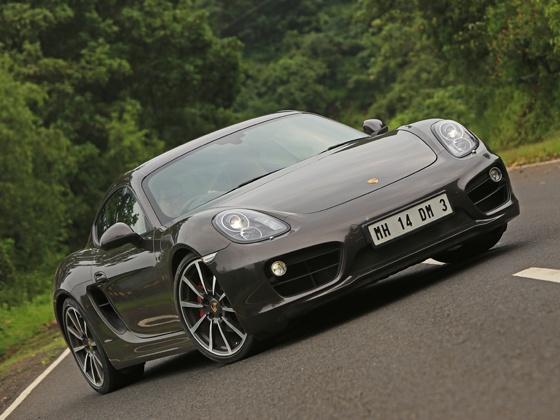
The newer damping system with the optional PASM active damping system (using four additional sensors for a faster and even more sensitive response) has made the car even more enjoyable. There is more grip and with it comes added stability even when flying on the limit on the mountain roads out of Pune. The PASM can be switched on to perform either in ‘Normal’ or ‘Sport’ mode wherein on smooth expressways and also on the fine tarmac in and around Lavasa city, the Cayman was impressive with just a hint of a comfort ride to dazzle the occupants but shift to ‘Sport’ and it is even more electric, not just is the ride quality terrific to savour but the damping forces are enhanced to deliver even more mechanical road grip and better body control. To drive the Cayman in the ‘Sport’ mode even on our roads is a stunning experience of the progress the Porsche boffins have engineered into the package.
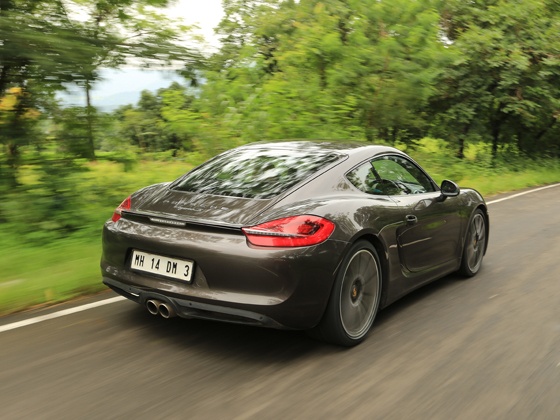
Our test car came with most of the bells and whistles and let me in on a small secret as to how Porsche makes the money the world over: specify a basic version and then entice buyers with the best bits as options. However, the key to enjoying the new Cayman in specifying the right optional bits otherwise you will only have a boulevard cruiser rather than the bruising sports car that it actually is, with the options incorporated of course! Our test car came with 20-inch alloy wheels shod with Pirelli’s brilliant P7 rubber – 245/35 ZR20 in front and massive 295/30 ZR20s at the rear. Added brilliance though on the chassis side are the brakes – taken from the 911 Carrera, all new and larger and better integrated into the various drive and damping systems. Bigger 330m dia cross-drilled and inner-ventilated discs do the business up front while the same sort but smaller – 299mm dia units are in action at the rear. The brakes are amazing in not just the way they bite and hold but even with our spirited driving up and down the mountain roads, there was hardly any brake fade to contend with! Nor did the rotors seem to heat up and smell like other sports cars would be prone to! And while we think these brakes are more than adequate, Porsche also offer ceramic discs in 350mm dia on all four wheels with the callipers painted yellow.
0 comments:
Post a Comment